“Working with Getuplead has been a great change for us. They helped us restructure our campaigns across Google and LinkedIn and made sure we weren’t just getting leads but the right ones.”
Feroz Engineer – Head of Marketing at Cyance.
About Cyance
Cyance is a B2B intent data platform that helps high-growth companies identify exactly when their best-fit customers are ready to buy. By tracking billions of intent signals, Cyance lets sales and marketing teams stop guessing and start targeting the accounts that are actively researching their solutions.
Why Cyance Chose Getuplead
Cyance had a market-leading product, but their acquisition engine had hit a plateau. They were generating plenty of leads, but too few were the enterprise accounts that actually became revenue. In a crowded MarTech and data market their cost of acquisition was climbing, and they had no clear view of which campaigns were driving MRR.
They didn’t need more volume. They needed a paid program tied to pipeline, run by a senior team that understood how B2B data buyers actually evaluate and buy. That is why they came to Getuplead.
The product was strong. The problem was that their acquisition engine had stopped keeping up with it.
That’s where Getuplead came in. Here’s what we did in 4 months:
- 65% more pipeline value
- 42% lower cost of acquisition
- 23% growth in MRR
In this case study, we break down exactly how we did it.
The Audit
As with every new client, we began with a full audit of Cyance’s paid accounts and their tracking, which we do for free. It turned three broad frustrations into specific, fixable problems.
Budget was leaking to broad, low-intent searches. Bidding on broad terms like “marketing data” was pulling in researchers, students and curiosity seekers rather than buyers, driving up CAC for very little return. 30% of their monthly spend was going to broad terms that never produced a qualified lead such as “ABM campaigns examples” or ” what is intent data”
The account was optimized for form fills, not revenue. Conversions fired on demo requests, so the platforms kept chasing whoever was cheapest to convert. That is how you end up with volume but no pipeline.
Tracking ended at the form. With no closed loop into HubSpot, no one could see which campaigns produced Sales Qualified Leads or closed revenue, only which produced form submissions. Optimizing toward what actually mattered was impossible.
The audit gave Cyance a clear map of where the budget was leaking and, more usefully, the order to fix it in. They decided to move forward, and the real work began.
Building the Strategy
We rolled it out in five phases, starting with the data and rebuilding each channel on top of it.
Step 1: Fixing the Tracking and Connecting Ads to Revenue
The first thing we fixed was what the account was optimizing toward. Like most B2B setups, Cyance’s ads were optimized for demo requests, which sounds right until you remember a demo request and a closed deal are not the same thing. The platforms were being rewarded for volume, so they kept finding more people willing to fill out a form, not more people likely to buy.
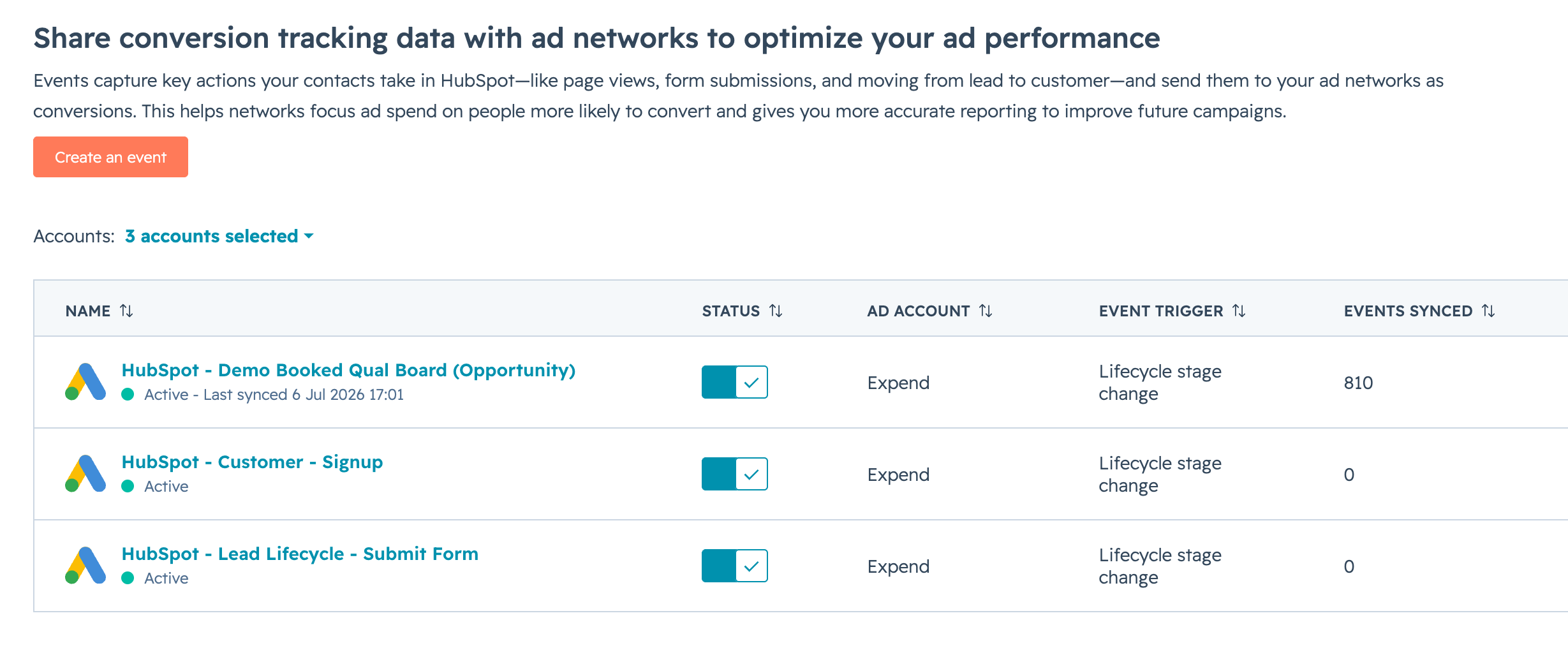
So we connected Cyance’s Google and LinkedIn accounts directly to their HubSpot CRM. Instead of stopping at the form, we tracked each lead as it moved to Sales Qualified Lead and then to closed-won, and fed that revenue data back into the ad platforms. From that point on, the algorithms optimized toward the profiles that actually became profitable customers, not the ones that were cheapest to convert.
That single change shifted the whole program from lead quantity to pipeline velocity, and everything after it was built on that clean data.
Step 2: Rebuilding the Google Ads Account for Qualified Leads
We started by restructuring the account. We identified the campaigns and keywords already producing the best leads, went through the search terms report to see what people actually typed before converting, and expanded from there with fresh keyword research built around how buyers describe intent data, not how the industry markets it.
The biggest structural problem was the ad groups. The account was running only one or two ad groups per campaign, so a single ad had to answer dozens of loosely related searches. Low relevance between the keyword and the ad means a lower Quality Score, and a lower Quality Score means you pay more for every click.
So we rebuilt the campaigns with tightly themed ad groups, each one mapped to a specific way someone might search, with ad copy written to match that exact search. Relevance went up, Quality Scores followed, and the cost per click and cost per lead came down as a result.
From there we concentrated budget on the themes bringing in the best leads, pushing for a higher impression share on the searches that actually turned into pipeline instead of spreading spend evenly across everything. That improved the down-funnel numbers, not just the click metrics.
We also went after buyers already looking for an alternative, the teams searching for legacy data providers and manual prospecting workarounds, and positioned Cyance as the more accurate, European-focused option.
Last, we cut the waste. We layered in an exhaustive negative keyword list to stop paying for searches that would never convert, and excluded the audiences that were obviously not buyers, so spend stayed on high-intent, in-market prospects.
The result was a Google account rebuilt around qualified leads instead of raw volume, and clean enough to scale once retargeting was layered on top.
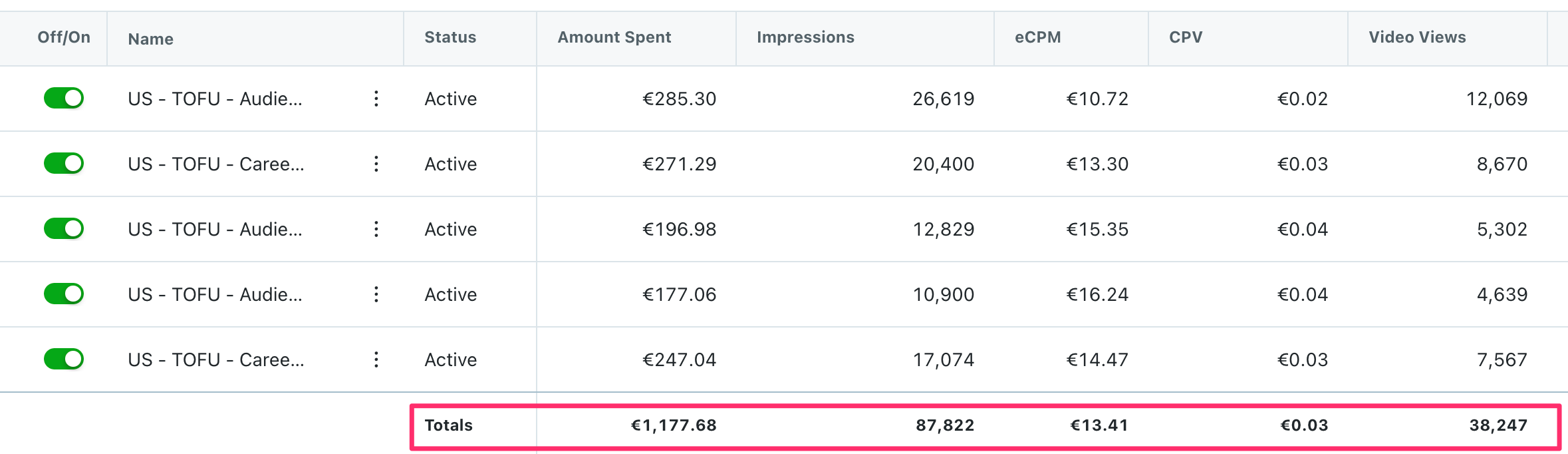
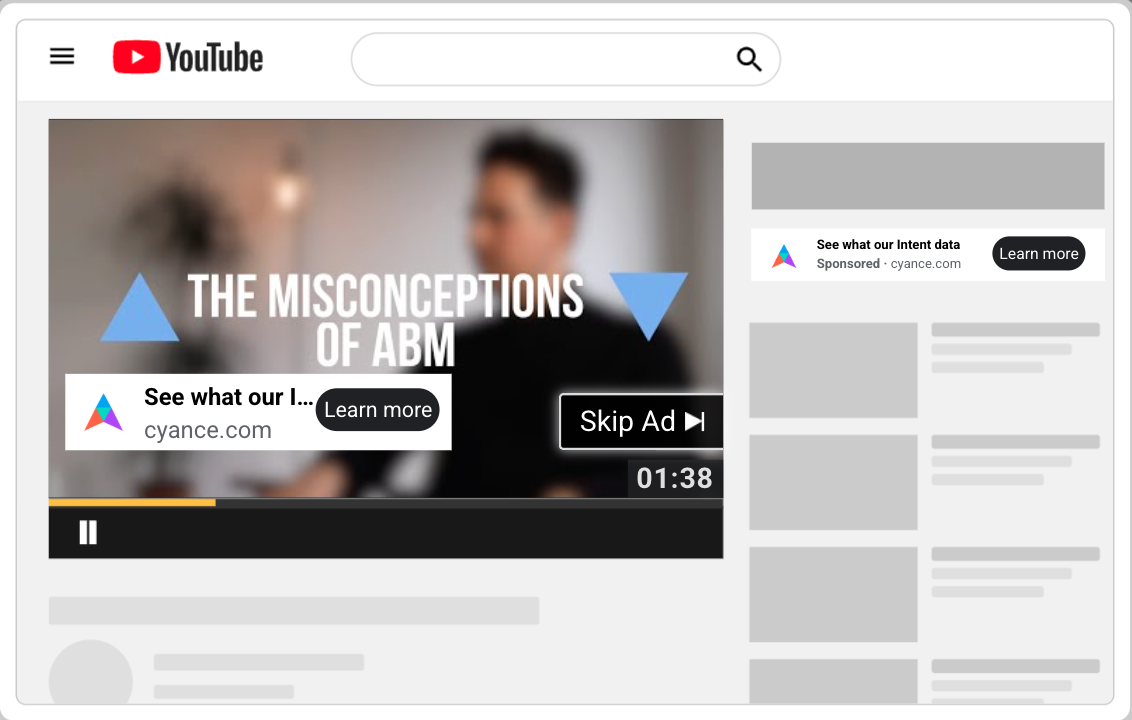
Step 3: Retargeting with Demand Gen YouTube Ads
With 6 to 12 month sales cycles, the risk was never losing the deal. It was being forgotten between the first click and the moment the buying committee finally moved. So we used Demand Gen campaign type on YouTube to stay in front of the accounts that had already shown intent.
Demand Gen, not In-Stream. Traditional In-Stream campaigns with Target CPV bidding optimize for the cheapest possible views, and in B2B the cheapest views are never your buyers. We ran Demand Gen with Maximize Conversions instead, and restricted placements to YouTube only. Leaving Gmail and Discover enabled would have burned the budget on clicks that never convert for a platform like Cyance.
Warm audiences, In-Feed placements. We retargeted visitors from the solution and pricing pages alongside HubSpot audiences synced through Customer Match. For an audience that already knows the brand, In-Feed outperforms In-Stream: they choose to click rather than being forced to watch, and the intent is already there.
Partner content, not brand videos. The videos featured Cyance’s clients and partners covering specific topics their shared audience cared about. Running only against people who already knew the brand, they weren’t there to introduce Cyance but to reinforce its authority with buyers already weighing the decision.
Step 4: Precision ABM Strategy with LinkedIn Ads
While Google captured the people actively searching, LinkedIn let us reach the accounts before they started looking. We ran it as a dedicated account-based program against a defined list of dream accounts in the human capital management space, one of Cyance’s best-fit verticals, targeting the CMOs and VPs of Sales inside those companies. We split it into two phases.
- Phase 1: we ran video campaigns built around the problem as an HCM revenue leader actually lives it: budget spent chasing HR and people teams that were never in-market, while the accounts that were ready to buy went unnoticed. Speaking to their world rather than a generic B2B pain made the message land. The goal wasn’t clicks. It was to make the problem feel urgent and put Cyance in the frame as the answer.
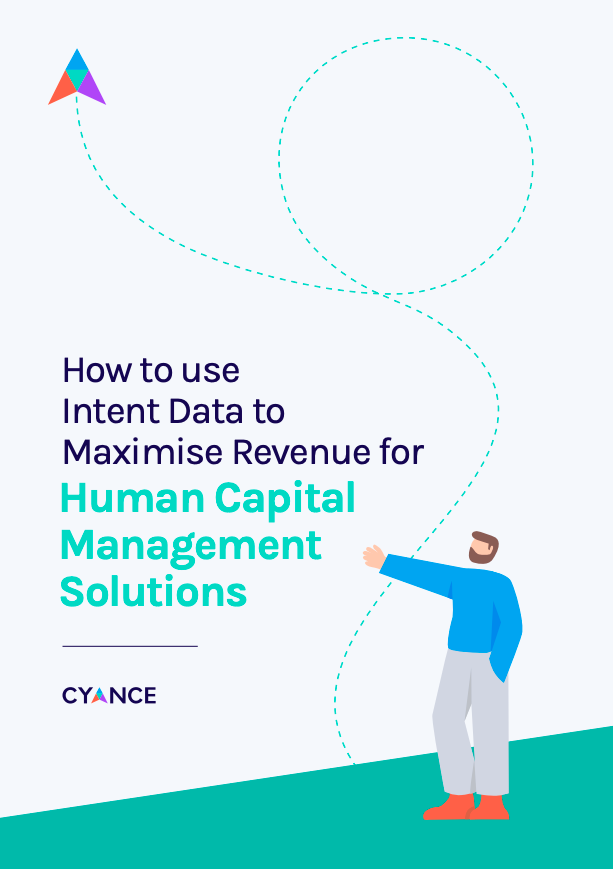
- Phase 2: we retargeted everyone who engaged with those videos using single image and document ads. The document ads went deeper into the HCM segment, using the language and the buying signals that matter in that market rather than a generic pitch. We ran them with LinkedIn Lead Gen Forms, so a busy executive could respond in two taps on mobile without leaving the feed, and the firmographic data flowed straight into HubSpot so sales knew exactly which account each lead came from.
Step 5: Measuring Pipeline Velocity
In a category where deals involve several stakeholders and take 6 to 12 months to close, last-click reporting tells you almost nothing. A prospect might discover Cyance through a LinkedIn video, come back through a branded search weeks later, and book a demo only after a colleague forwards them a case study. Judging each channel on the click that happened to come last would have meant cutting the campaigns that were actually creating demand.
So we measured the program the way the sales cycle actually works. With HubSpot synced across every channel, we tracked how accounts moved from first touch to Sales Qualified Lead to closed-won, and how long each stage took. That showed us which channels opened accounts, which ones accelerated them, and where deals stalled. Budget went to whatever moved accounts forward, regardless of which platform got credit for the final click.
The Results
By shifting the focus from clicks to qualified pipeline, the program delivered:
- 65% increase in pipeline value, driven by larger, enterprise-level accounts.
- 23% growth in MRR attributed to the new paid media strategy.
- 42% decrease in CAC, by cutting wasted spend and concentrating on high-conversion ABM.
- Full closed-loop visibility, so Cyance now knows exactly which campaigns generate the highest-value customers.
If you’d like to see how we help B2B SaaS and tech companies turn paid media into qualified pipeline, book a free audit with our team or email info@getuplead.com.