How We Helped Zinc Generate 56% More Qualified Demos at a 28% Lower Cost
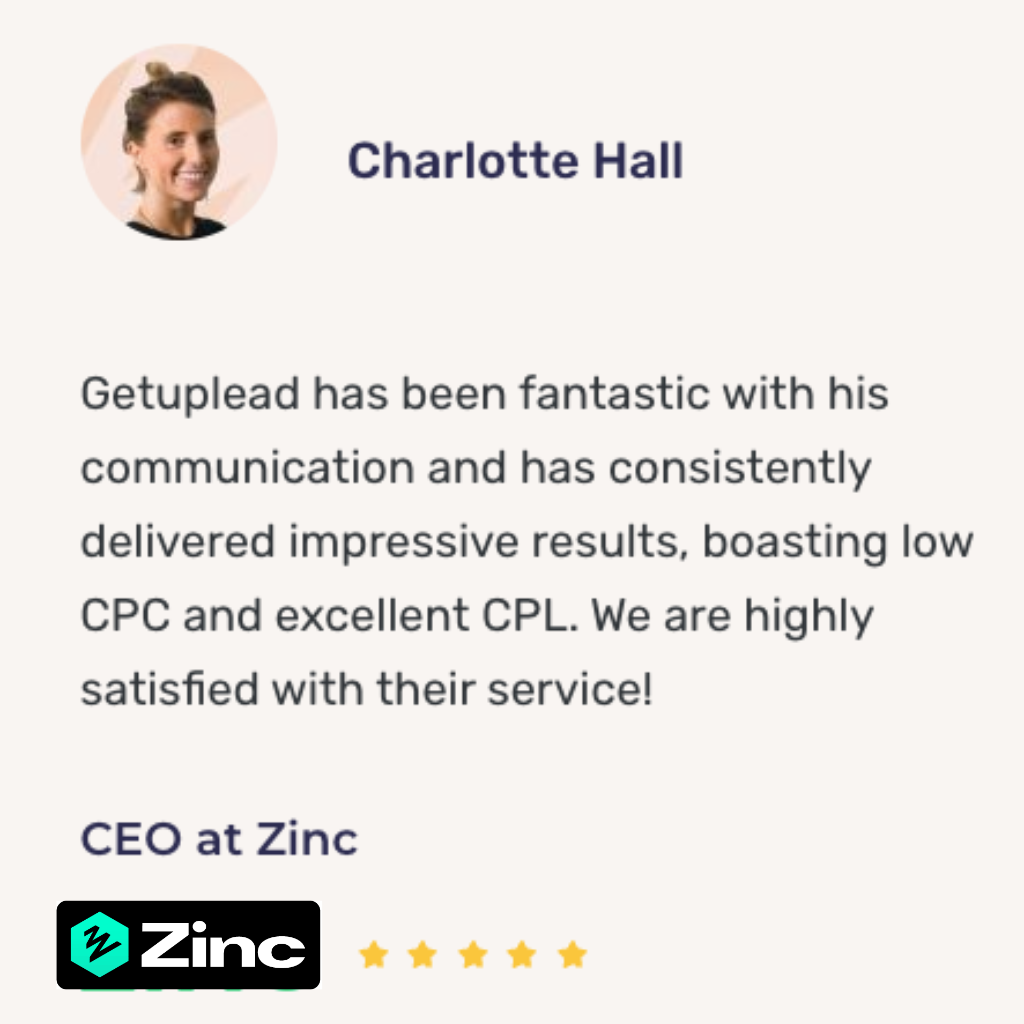
Getuplead has been fantastic with his communication and has consistently delivered impressive results, boasting low CPC and excellent CPL. We are highly satisfied with their service!
Charlotte Hall – CEO at Zinc
About ZINC
Zinc is a background-checking platform for HR and talent teams.
Traditional screening is slow and manual. Zinc automates it. Checks run across 190+ countries, results come back in days, and everything plugs into the tools teams already use like Workday, Greenhouse, and HiBob.
The product was already proven. Over two million checks completed. A 4.7/5 rating from more than 150 businesses on G2. Customers like Octopus Energy, EDF Energy, Revolut, and HelloFresh.
Until they came to us, their previous agency had been generating a steady volume of leads, but the number of sales-qualified leads was really low. They needed qualified demo requests from companies that could actually buy, not broad traffic and a pile of irrelevant leads that went nowhere with sales.
That’s where Getuplead came in. Here’s what we did in 16 months:
56% more qualified demos
28% lower cost per qualified demo
34% of pipeline influenced by paid
In this case study, we break down exactly how we did it.
Why Zinc Chose Getuplead
Zinc was already running paid ads with another agency that was generating a steady volume of leads but the number of sales-qualified leads was really low.
The leads came in but most had no intent. People who were never going to buy screening software. Contacts that went nowhere the moment they reached sales. The cost per lead looked fine on a dashboard but almost none of it turned into pipeline.
The campaigns weren’t optimized for the right audience and intent.
The client needed qualified demo requests from companies that could actually buy, so they wanted a senior PPC team that already had proven results in the HR space. We’d run paid strategy for HR and people-tech companies before, like StaffCircle and TechMap, so we already knew the ICP and the buyer
Zinc was already running paid ads with another agency that was generating a steady volume of leads, but the number of sales-qualified leads was really low.
The leads came in, but most had no intent. People who were never going to buy screening software. Contacts that went nowhere the moment they reached sales. The cost per lead looked fine on a dashboard, but almost none of it turned into pipeline.
The campaigns weren’t optimized for the right audience and intent.
The client needed qualified demo requests from companies that could actually buy, so they wanted a senior PPC team that already had proven results in the HR space. We’d run paid strategy for HR and people-tech companies before, like StaffCircle and TechMap, so we already knew the ICP and specific buyer.
The Audit
The audit found that $4,500 had been spent over two months on broad match queries and audience partner networks with low intent. Many of these were job-seekers and irrelevant B2C keywords.
That was just the surface. A few bigger problems sat underneath:
Lead quality was low. Most form fills had no intent behind them.
The account chased the wrong metric. It optimized for cheap leads, not qualified pipeline.
Tracking was broken. Form button clicks wer counted as a primary conversion.
There was no demand generation. Everything targeted the few buyers already searching. Nothing reached the much larger group who weren’t searching yet.
The takeaway was simple. Zinc didn’t need more leads. They needed better ones. And they needed a system built to turn them into pipeline.
Building the Strategy
Zinc loved the audit. We showed them exactly where their account was falling short and gave them a clear roadmap to better results. With the green light to move forward, we rolled out their campaign in three phases.
We rolled it out in phases. Fix the data first. Then capture demand. Then build it.
Here’s how it went.
Phase 1: Fixing Tracking and Connecting the CRM
The first thing we checked was the tracking. It was broken in a way that mattered.
Conversions were firing on form fills. So Google and LinkedIn went looking for more form fills. That’s how you end up with leads nobody in sales wants. The platforms were doing their job. They’d just been told to chase the wrong thing.
So before spending a dollar on new campaigns, we fixed the data.
We repaired the conversion tracking that was misfiring. Then we connected Zinc’s HubSpot to the ad platforms. Now the CRM was the source of truth, not the landing page.
Using offline conversion import, we sent the real outcomes back to the platforms. Which leads sales qualified. Which ones booked a demo. Each one tied to the click that produced it.
This changed everything. Google and LinkedIn could finally see which clicks turned into pipeline and which turned into nothing. So they stopped chasing cheap form fills and started finding people who looked like real buyers.
Nothing fancy. We just stopped grading the account on the wrong test. Everything after this was built on that clean data.
Phase 2: Google and Bing Search Campaigns
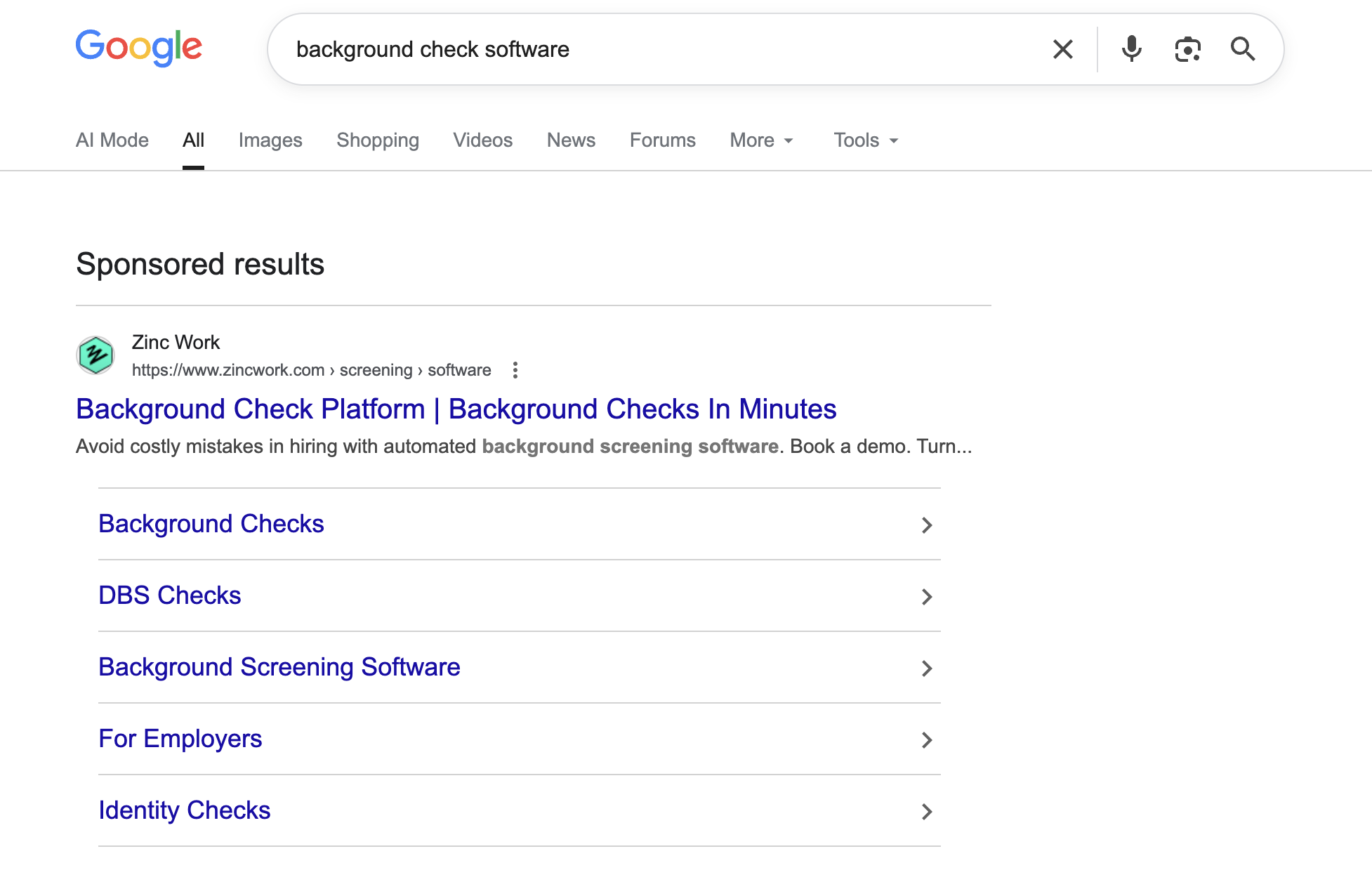
Next we launched search on Google and Bing.
When someone searches for “background check software” or “right to work check provider,” they’re telling you they’re in-market. That intent is worth paying for. Google gave us the volume. Bing let us reach the same kind of buyer at a lower cost.
Below are the strategies we used.
Branded campaign. Competitors were bidding on Zinc’s own name. That meant Zinc was losing traffic on searches that were already theirs. So we launched a branded campaign to take it back. It protected their name and caught people already looking for them. Some of the cheapest, highest-intent clicks in the account.
High-intent keywords.High-intent keywords. From there we went after the searches only a buyer would type, like background check software, pre-employment screening platform, and right to work check provider. We kept everything on exact and phrase match, with no broad match letting Google spend on anything loosely related, from job seekers to students to people looking for free tools. We also built an exhaustive negative keyword list to stop wasting impressions on searches that would never convert. We’ve started to rank continously at the top of those high-intent searches, with an 80% impression share target.
Bing. Once Google was working, we copied the same setup into Bing. Same keywords, same tight match, same HubSpot data feeding back. The volume was small, as expected. But the cost per qualified demo came in 18% below Google, at $195 versus $238. Not a channel to scale on its own. Just extra qualified pipeline at a lower cost.
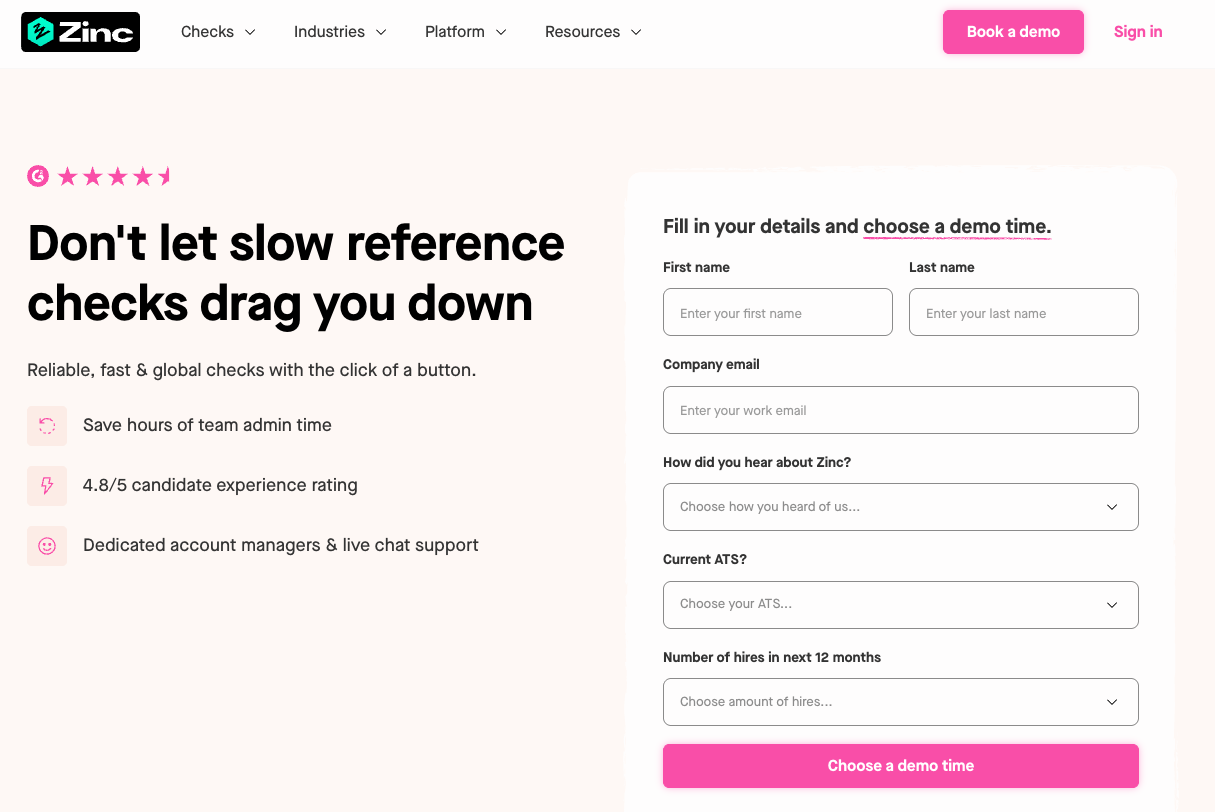
Landing pages tailored by keyword topic. We built a dedicated landing page for each main keyword theme, with the message and structure matched to what that specific search was looking for. Better relevance between the search and the page meant a stronger Quality Score and a higher conversion rate. A search for “reference checks,” for example, hit a landing page built specifically around reference checks.
Results. The numbers told a different story than the one Zinc walked in with. Search brought in 185 qualified leads over the campaign. The cost per qualified demo dropped from around $331 with their previous agency to $238 on Google, a 28% improvement,with Bing lower still at $195. The quality finally matched what the sales team actually needed.
Phase 3: LinkedIn Ads
Search only reaches people who are already looking, and in a category like background checks that’s a small group at any given moment. Most of Zinc’s future buyers aren’t searching for a screening platform today. If you only ever bid on the small percentage who are in-market, you run out of pipeline fast. So we used LinkedIn to reach the accounts before they started considering buying a solution and to build the demand that search would later capture.
We ran it as an account-based program. Instead of spraying the whole platform, we started from a defined list of target accounts in enterprise healthcare, one of Zinc’s best-fit segments and a market where slow, manual checks cause real hiring pain. Each account carried its own budget, so spend stayed on the specific healthcare providers worth winning rather than leaking across everyone who happened to match a job title. That’s the difference between advertising and account-based marketing. We weren’t buying reach. We were buying presence inside a named set of healthcare accounts.
We built the ads full-funnel. The goal was never to ask a cold buyer for a demo on the first touch. It was to walk the same accounts through a story, one stage at a time. The top of funnel named the problem a healthcare People team actually feels. The middle showed how to fix it. And the last stage pointed the warmed-up accounts to the page built to convert. Here’s how that looked in practice.
We led with problems, not features. The ads that worked best barely mentioned Zinc. They talked about what the buyer was struggling with. When you open with the problem someone lives every day, they stop scrolling. The product comes later. We also ran ungated document ads people could read right in the feed with no form wall, so the value landed before we ever asked for anything back.
Thought Leader Ads put real faces in the feed. Some of the best content in the program had nothing to do with the company page. We took posts from the personal profiles of Zinc’s own leaders and promoted them as Thought Leader Ads to the same healthcare account list. The organic reach wasn’t the point. The point was that the exact People and Talent leaders Zinc was selling into kept seeing familiar faces sharing ideas about hiring and screening that mattered to them. That’s social proof at scale, and it’s one of the quieter reasons deals inside those accounts kept moving forward.
None of this was built for same-day form fills. It was built to warm up the healthcare accounts the sales team was already chasing, so that when a buyer inside one of them was finally ready, Zinc was the name they already knew.
Results. The ABM program brought in around 11 high-qualified demo from the target account list, which is a strong return from a narrow set of companies. But the direct demos were only part of it. LinkedIn’s real job was to make Zinc familiar inside the healthcare accounts the sales team was already working, so that when a buyer there finally started searching, Zinc was the name they already knew. LinkedIn ended up influencing 78% of the pipeline coming out of the healthcare segment.
The Results
For the first time, Zinc’s ads were driving qualified pipeline instead of wasted spend. The PPC and ABM strategies we built gave them a steady flow of demo requests from companies that could actually buy, backed by clean CRM data they could scale with confidence.
Here are the key results after 3 months:
56% more qualified demos
28% lower cost per qualified demo
34% of pipeline influenced by paid
Zinc stopped counting form fills. They started counting pipeline.
The program brought in around 40 qualified leads from the target account list, which is a strong return from a narrow set of companies rather than the whole platform. But the direct leads were only part of it. LinkedIn’s real job was to make Zinc familiar inside the healthcare accounts the sales team was already working, so that when a buyer there finally started searching, Zinc was the name they already knew.
Cases Studies
Read how we have generated lead and positive ROI for B2B companies